
Inclusion body myositis (IBM)
The inflammatory myopathies include IBM as well as dermatomyositis and polymyositis. They affect children and adults of both sexes, although IBM is usually first diagnosed at middle-age and occurs more frequently in men. Subjects with IBM have difficulty standing, gripping and in severe cases, swallowing. This is due to significant wasting or atrophy of particular leg, arm and oropharyngeal muscles.
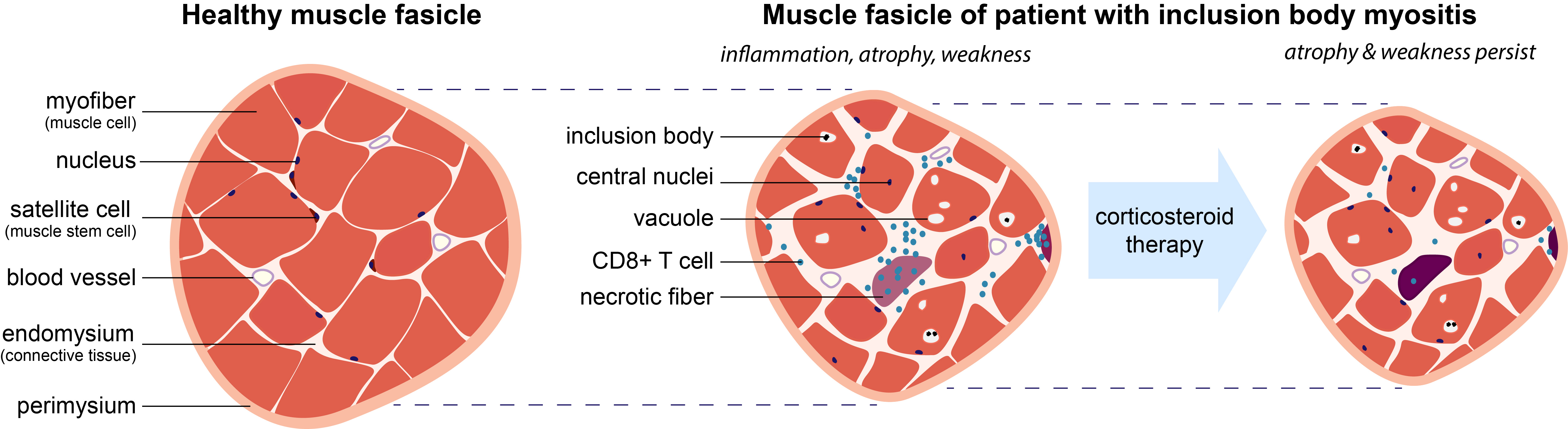
A muscle fasicle of an IBM patient is considerably smaller than one from a healthy individual. The myofibers often contain vacuoles or holes that can contain protein deposits forming inclusion bodies. This results from inflammation where CD8+ T cells direct an immune response against muscle. Corticosteroids can suppress this response, but they cannot restore muscle mass or function.
In some cases, corticosteroids can actually cause more muscle atrophy.
Heart failure, DMD, sarcopenic obesity
AVGN7 blocks ActRII signaling specifically in skeletal and cardiac muscle, preventing either from wasting. It also enhances their function and significantly reduces fat mass. This broad applicability explains why AVGN7 is being tested in a wide variety of rare and even large disease indications including the following.
Heart Failure (HF)
- Depending on type, HF has a mortality rate of up to 75%
- Several studies demonstrate ActRII-attenuators like AVGN7 to restore healthy cardiac function in different animal models of HF with either reduced or preserved ejection fraction (i.e., HFrEF & HFpEF)
- There are multiple FDA-approved drugs to treat HFrEF, but none for HFpEF
Duchenne Muscular Dystrophy (DMD)
- Occurs in ~1 of every 3,500-5,000 male births, traditionally diagnosed at ~5 years of age
- Characterized by muscle dysfunction, degeneration, wasting, necrosis, fibrosis and fatty infiltration
- Terminal with a median life expectancy of 25 years of age
- Gene replacement and editing technologies can only prevent future muscle degeneration. Ancillary treatments like AVGN7 are needed to compensate for accumulated pathologies, especially in older subjects with more advanced disease progression
Sarcopenic Obesity (SO)
- Severe obesity occurs in over 9% of the US population
- With SO, severely obese subjects also experience muscle wasting and cannot be treated with GLP-1 drugs that unfortunately induce muscle loss
- AVGN7 diverts calories away from fat reserves to support muscle growth, fighting fat with muscle
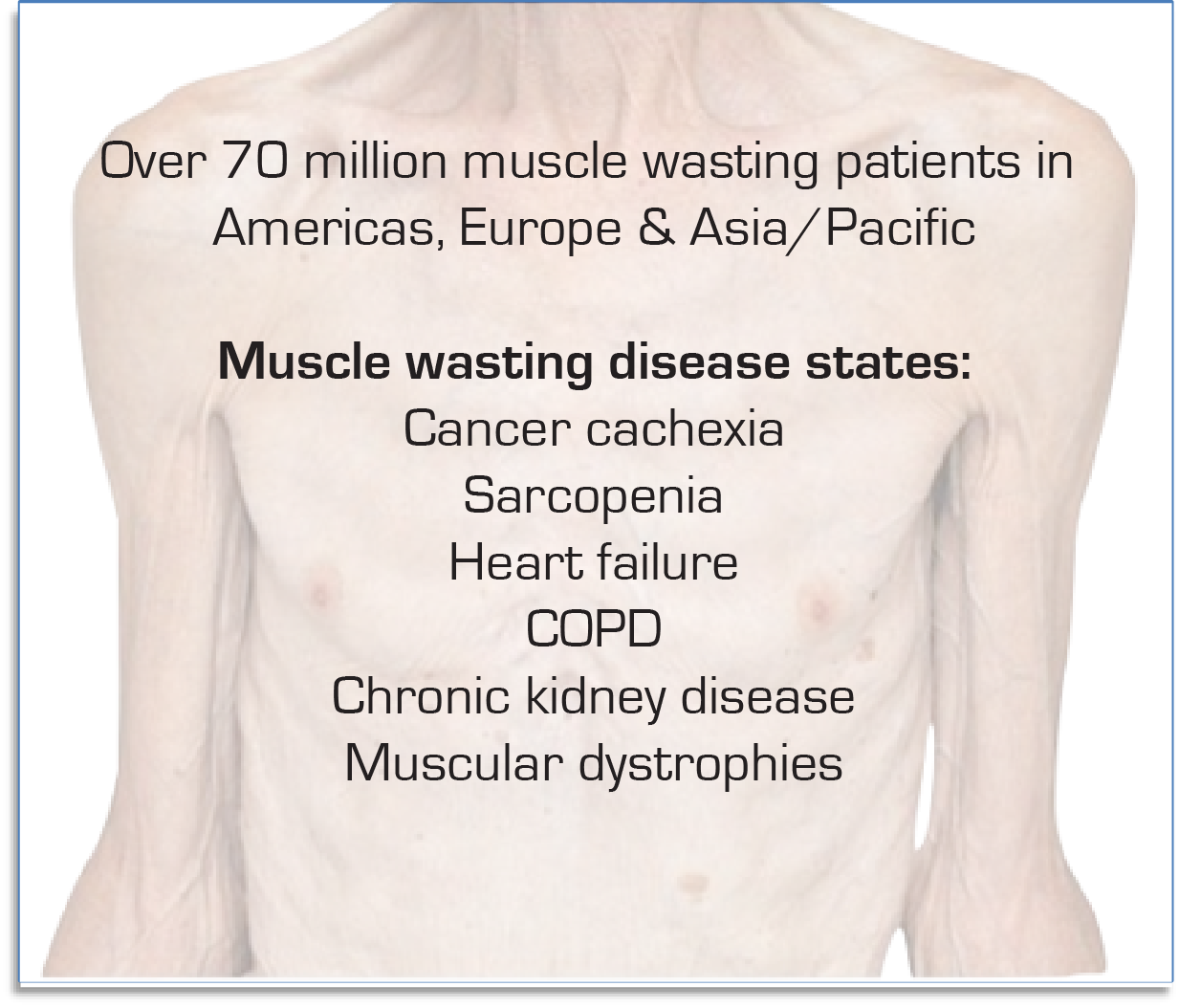
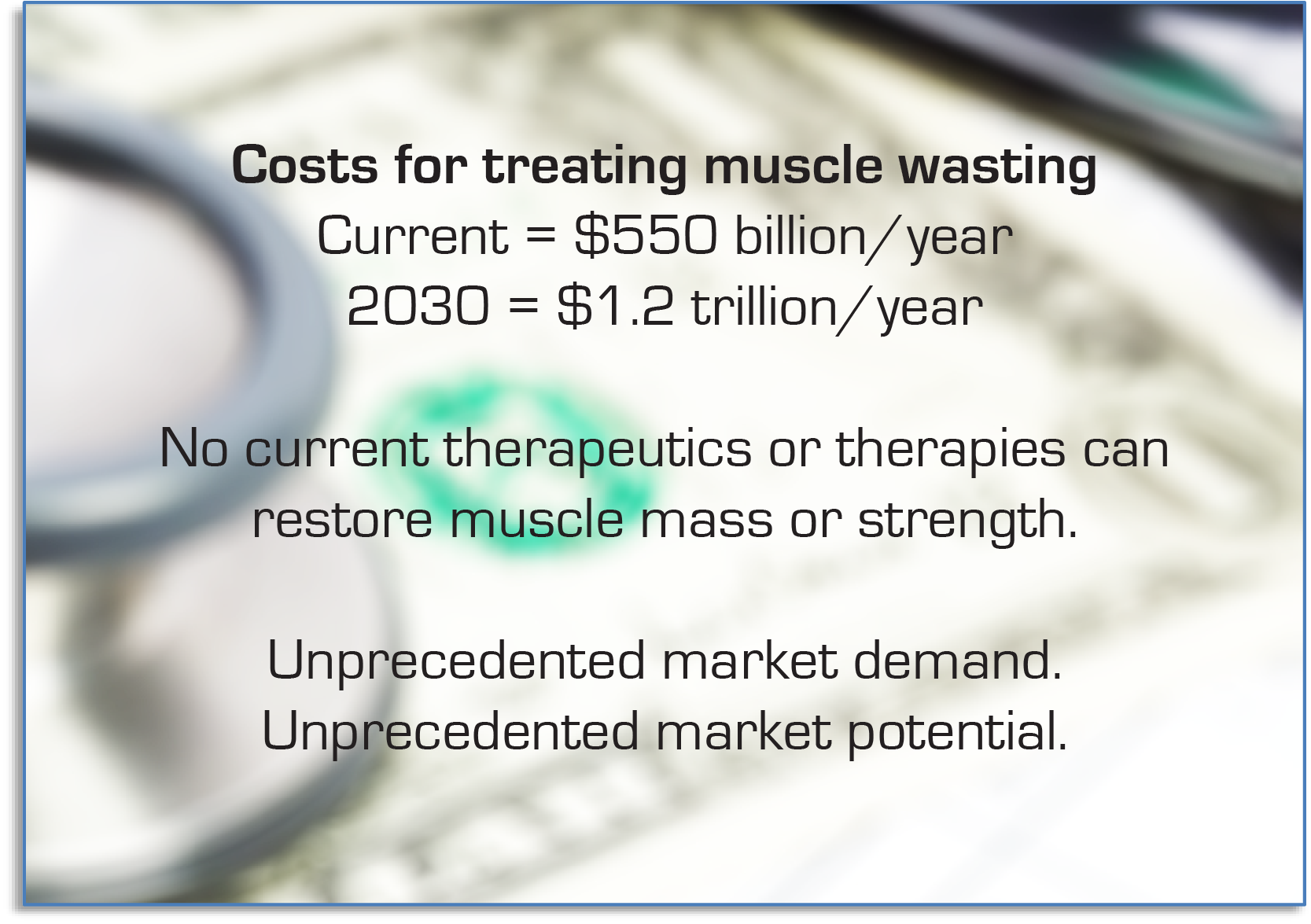
"Cost" of muscle wasting
Personal costs. Skeletal and cardiac muscle wasting occur in many other primary causes of disease.
- 80% of advanced cancer patients develop cachexia, causing 35-50% of mortalities
- 50% of people over 80 suffer from sarcopenia, the age-related loss of muscle
- Heart failure occurs in 23 million people globally and also causes skeletal muscle wasting
- Muscle wasting is inherent to the muscular dystrophies and myopathies, often with fatal consequences
Financial costs. The market potential for treating muscle wasting is enormous. Current costs exceed $550 billion, $93 billion for cancer alone, yet nothing can actually restore muscle mass or strength.
Treatments primarily focus on increasing appetite, but fail to deter muscle wasting while corticosteroids can even exacerbate the degeneration. Thus, AVGN7 has the potential to revolutionize the clinical treatment of many different disease states, whether used alone or in combination with other therapeutics.
Climbing out of the degenerative hole
A sad reality is that no current treatment for any muscle wasting disease can restore muscle mass and function. Some treatments, like corticosteroids, can suppress related pathologies while other novel treatments, like gene replacement or gene editing therapies, prevent future muscle degeneration.
Even if developing gene replacement/editing therapies eventually prove effective, ancillary treatments like AVGN7 are needed to build muscle mass and strength. To learn more about our combinatorial approach and about different muscle wasting disease indications, click the link to the right.